Health

626 stories · page 39 of 42

Artificial Intelligence in Ischemic Stroke Lesion Segmentation: A Narrative Review of Deep Learning Methods, Clinical Utility, and Future Directions
HealthBoth readings

Artificial Intelligence in Ischemic Stroke Lesion Segmentation: A Narrative Review of Deep Learning Methods, Clinical Utility, and Future Directions

Ischemic stroke management is time-sensitive, and lesion segmentation supports treatment selection, prognostication, and reproducible quantification. Deep learning (DL) aims to accelerate and standardize lesion delineation to augment neuroimaging workflows. We conducted a narrative review of DL-based ischemic stroke lesion segmentation studies published from 2020 to 2025. PubMed, Google Scholar, Scopus, and IEEE Xplore were searched; ~ 500 records were identified, and 40 full-text studies were included after scr…

Journal of Imaging Informatics in Medicine
Plasma proteomics and machine learning deliver non-invasive distinction between fibrotic hypersensitivity pneumonitis and idiopathic pulmonary fibrosis
Evidence-backed gain

Plasma proteomics and machine learning deliver non-invasive distinction between fibrotic hypersensitivity pneumonitis and idiopathic pulmonary fibrosis

Hypersensitivity pneumonitis (HP) manifests as fibrotic (FHP) and non-fibrotic (NFHP) phenotypes. Clinically distinguishing FHP from idiopathic pulmonary fibrosis (IPF) remains challenging owing to phenotypic overlap, despite divergent management protocols. This investigation sought to develop a plasma proteomics-based framework for differential diagnosis between these entities. A total of 119 subjects were enrolled from the Chinese Interstitial Lung Disease (ILD) National Cohort and the PORTRAY IPF Cohort betwe…

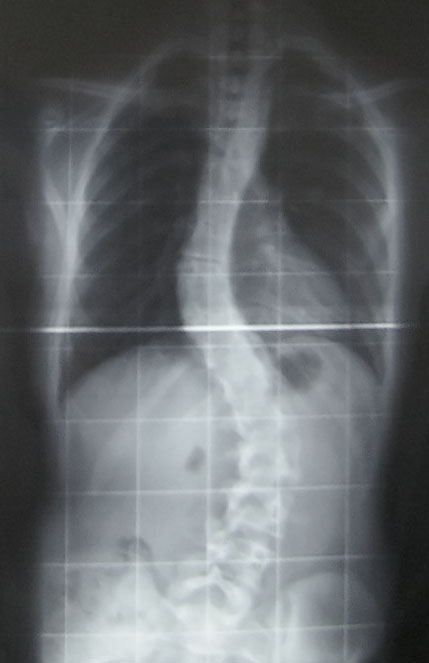
Predicting postoperative coronal imbalance in Lenke 1/2 adolescent idiopathic scoliosis: A machine learning model with clinical interpretability
Evidence-backed gain

Predicting postoperative coronal imbalance in Lenke 1/2 adolescent idiopathic scoliosis: A machine learning model with clinical interpretability

Selective posterior thoracic fusion (sPTF) for Lenke 1/2 adolescent idiopathic scoliosis (AIS) aims to reconcile multi-planar correction with motion preservation. Nevertheless, postoperative coronal imbalance (CIB) frequently compromises these objectives. This study developed an interpretable machine learning architecture to stratify CIB risk and identify key predictors. Data from 282 patients were analyzed. Following dual-stage dimensionality reduction (Boruta and LASSO) on 24 candidate predictors, ten machine…

Comprehensive plant disease classification and severity estimation for sustainable farming via automatic segmentation and multi-scale feature fusion
Evidence-backed gain

Comprehensive plant disease classification and severity estimation for sustainable farming via automatic segmentation and multi-scale feature fusion

Detecting plant leaf diseases at an early stage is one of the most important requirements for sustainable agriculture, increasing crop productivity, and achieving the global Sustainable Development Goals (SDGs). However, accurately recognizing them in real-world farm fields can still be difficult due to factors such as background complexity, changes in light conditions, and very similar looking classes from a visual standpoint. In order to solve these problems, the authors here present a new Multi-Scale Feature…

Effect of AI-assisted caries annotation on dental students' performance in caries detection on panoramic radiographs
Evidence-backed gain

Effect of AI-assisted caries annotation on dental students' performance in caries detection on panoramic radiographs

Dental caries remains one of the most prevalent oral diseases globally. The integration of artificial intelligence (AI) into dental radiographic interpretation, particularly for caries detection, has expanded rapidly. AI-assisted caries annotation may help dental students identify carious lesions on panoramic radiographs-a commonly used diagnostic tool for evaluating teeth and surrounding structures-thereby improving diagnostic accuracy, efficiency, and confidence. This study aimed to assess the effect of AI-ass…

Health

AI-Assisted cardiomegaly screening via implicit morphological inference and human-in-the-loop validation

Cardiomegaly screening via manual Cardiothoracic Ratio (CTR) measurement remains a clinical bottleneck, while contemporary deep learning solutions often suffer from algorithmic bloating. To address the need for resource-efficient and interpretable triage, this study proposes a framework driven by implicit morphological inference, which bypasses the requirement for explicit heart segmentation. We developed UBNet-Seg, a lightweight U-Net variant (2.3 million parameters) trained on a heterogeneous dataset of 11,748…

AI-Assisted cardiomegaly screening via implicit morphological inference and human-in-the-loop validation
Health

Artificial intelligence for diagnosis of keratoconus using Scheimpflug based corneal tomography

Aim To develop and evaluate the diagnostic accuracy of deep learning (DL) models in differentiating keratoconus (KC) from normal eyes with regular astigmatism. Methods A comparative cross-sectional study was conducted at the Cornea and Diagnostic Department of Al-Shifa Trust Eye Hospital, Pakistan. Galilei dual Scheimpflug-based corneal topography was performed to obtain four corneal maps: anterior axial curvature, posterior axial curvature, corneal thickness, and posterior elevation. Four convolutional neural n…

Artificial intelligence for diagnosis of keratoconus using Scheimpflug based corneal tomography
Health

Advancements in machine learning and deep learning for early detection and management of mental health disorder

For the early identification, diagnosis, and treatment of mental health illnesses, the integration of deep learning (DL) and machine learning (ML) have started playing a significant role. By evaluating complex data from imaging, genetics, and behavioral assessments, these technologies have the potential to improve clinical results significantly. However, they also present unique challenges relating to data integration and ethical issues. The development of ML and DL methods for the early diagnosis and treatment…

Advancements in machine learning and deep learning for early detection and management of mental health disorder
Health

A deep learning framework for efficient pathology image analysis

Artificial intelligence has transformed digital pathology by enabling biomarker prediction from high-resolution whole-slide images. However, current methods are computationally inefficient, processing thousands of redundant tiles per slide and requiring complex aggregation models. We introduce EAGLE (Efficient Approach for Guided Local Examination), a deep learning framework that emulates pathologists by selectively analyzing informative regions. EAGLE combines task-agnostic tile selection with detailed feature…

A deep learning framework for efficient pathology image analysis
Health

Phenotyping antidepressant treatment response with deep learning in electronic health records

ABSTRACT Efficient, accurate phenotyping for antidepressant treatment response in electronic health records (EHRs) could facilitate precision psychiatry applications but remains a challenge. Increasingly, artificial intelligence methods using “deep learning” applied to clinical data have shown promise in complex classification problems. Here, we systematically evaluate the performance of eight deep-learning-based natural language processing models in classifying response to antidepressants in a large real-world…

Phenotyping antidepressant treatment response with deep learning in electronic health records
Health

Large language models are powerful electronic health record encoders

Electronic health records (EHRs) offer considerable potential for clinical prediction, but their complexity and heterogeneity challenge traditional machine learning. Domain-specific electronic health record foundation models trained on unlabeled EHR data have shown improved predictive accuracy and generalization. However, their development is constrained by limited data access and site-specific vocabularies. We convert EHR data into plain text by replacing medical codes with natural-language descriptions, enabli…

Large language models are powerful electronic health record encoders
Health

A survey on computational pathology foundation models: datasets, adaptation strategies, and evaluation tasks

Abstract Computational pathology foundation models (CPathFMs) have emerged as a powerful approach for analyzing histopathological data, leveraging self-supervised learning to extract robust feature representations from unlabeled whole-slide images. These models, categorized into uni-modal and multi-modal frameworks, have demonstrated promise in automating complex pathology tasks such as segmentation, classification, and biomarker discovery. However, the development of CPathFMs presents significant challenges, su…

A survey on computational pathology foundation models: datasets, adaptation strategies, and evaluation tasks