 ace
acePredicting postoperative coronal imbalance in Lenke 1/2 adolescent idiopathic scoliosis: A machine learning model with clinical interpretability
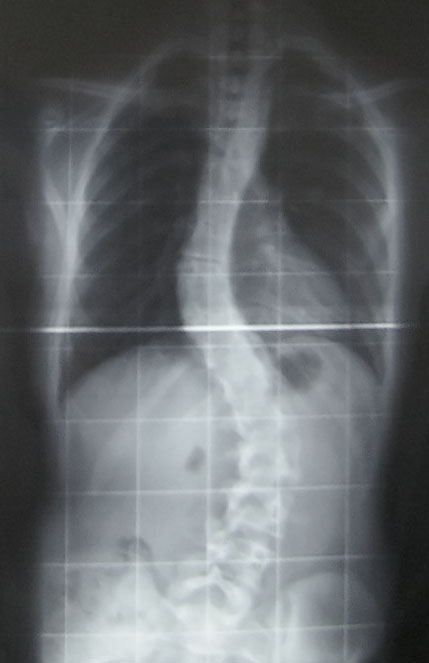
Selective posterior thoracic fusion (sPTF) for Lenke 1/2 adolescent idiopathic scoliosis (AIS) aims to reconcile multi-planar correction with motion preservation. Nevertheless, postoperative coronal imbalance (CIB) frequently compromises these objectives. This study developed an interpretable machine learning architecture to stratify CIB risk and identify key predictors. Data from 282 patients were analyzed. Following dual-stage dimensionality reduction (Boruta and LASSO) on 24 candidate predictors, ten machine…
In brief
In 282 patients with Lenke 1/2 adolescent idiopathic scoliosis treated with selective posterior thoracic fusion, investigators built an interpretable machine learning pipeline to stratify risk of postoperative coronal imbalance. After reducing 24 candidates to key features, a LightGBM model achieved the highest discrimination with AUC 0.885 in training and 0.824 in internal validation, with SHAP highlighting LIV-LSTV relationship, Lumbar Modifier, and Risser grade.
The work matters because coronal imbalance frequently compromises correction and motion preservation goals in this population, and a transparent risk estimate could inform distal fusion level choice. As of the July 2026 publication date, performance is limited to internal validation, so generalizability, calibration in other centers, and impact on surgical decisions remain unproven.
Main points
- Study analyzed 282 patients undergoing selective posterior thoracic fusion for Lenke 1/2 adolescent idiopathic scoliosis.
- Dual-stage dimensionality reduction using Boruta and LASSO reduced 24 candidate predictors before training ten machine learning architectures.
- SHAP analysis found lower LIV-LSTV values, Lumbar Modifiers C, and lower Risser grades were associated with higher predicted risk of CIB.
The gain
LightGBM model trained on 282 Lenke 1/2 AIS patients predicted postoperative coronal imbalance with AUC 0.885 training and 0.824 internal validation, identifying LIV-LSTV, Lumbar Modifier, and Risser grade as key predictors.
The rundown
Researchers applied Boruta and LASSO to 24 candidate predictors, then trained and evaluated ten machine learning architectures using split-sample internal validation with AUC, Brier score, and decision curve analysis.
The framework is presented as incorporating distal instrumentation selection, lumbar curve morphology, and skeletal maturity to support assessment of the trade-off between deformity correction and preservation of lumbar motion segments.
Sources
- Peer-reviewedInternational Orthopaedics2026-07-18

CT-based deep learning for identifying sinonasal inverted papilloma: a single-center retrospective study
European Archives of Oto-Rhino-Laryngology
Development and Validation of an Interpretable Machine Learning Model for Osteoporosis Prediction Using Multimodal Musculoskeletal Ultrasound and Clinical Features
Journal of Ultrasound in Medicine
Comprehensive analysis and external validation of a glycolysis-related gene signature as a prognostic index for skin cutaneous melanoma
Melanoma Research
The debate