 ace
ace
- Generative artificial intelligence and ethical considerations in health care: a scoping review and ethics checklist
- Artificial Intelligence-Driven Development and Characterization of Nanomedicine
- “It happened to be the perfect thing”: experiences of generative AI chatbots for mental health
- Data-Centric Foundation Models in Computational Healthcare: A Survey

Business
exposure to US AI assets and its impact on global financial conditions
The threat of an AI share price crash rippling out across global markets is putting world financial stability at risk, the International Monetary fund has warned. In its twice-yearly Global Financial Stability Report, the IMF highlighted the sky-high valuations for AI companies along with their increasing debt pile as one reason that risks in the system are “elevated”. “The consequences of an AI correction could be global,” it warned. Read more
The gain High AI company valuations and exposure to US AI assets are currently supporting the global economy through wealth effects.
The problem A correction in highly valued, leveraged AI-related assets could sharply reduce investment, trigger equity market corrections, tighten financial conditions, and create global spillovers.

EducationBoth readings
Navigating opportunities and challenges of generative AI in higher education: towards responsible, equitable, and human-centered integration
Frontiers in Artificial Intelligence
ScienceBoth readings
Federated Machine Learning
ACM Transactions on Intelligent Systems and Technology
CrimeBoth readings
XAI-driven Data Mining for Self-defending IoT Systems: Enhancing Cybersecurity Transparency in the Age of Smart Cities
International Journal of Innovative Science and Research Technology
CrimeBoth readings
The development of cyber threats related to the use of AI
Przegląd Bezpieczeństwa Wewnętrznego
CT-based deep learning for identifying sinonasal inverted papilloma: a single-center retrospective study
This study aimed to develop a CT-based deep learning model as a decision-support system for the classification of sinonasal inverted papilloma (IP), nasal polyps, and normal paranasal anatomy. A retrospective dataset of 871 patients who underwent paranasal CT imaging between 2020 and 2024 was analyzed. All diagnoses were confirmed histopathologically. Two representative CT slices per patient were selected at the patient level by an experienced radiologist blinded to final diagnosis. The dataset was split into 70…
European Archives of Oto-Rhino-LaryngologyDevelopment and Validation of an Interpretable Machine Learning Model for Osteoporosis Prediction Using Multimodal Musculoskeletal Ultrasound and Clinical Features
This study aimed to develop and validate an interpretable machine learning model for osteoporosis prediction based on multimodal ultrasound and clinical features. Participants with suspected osteoporosis were enrolled from 2 medical centers. Clinical variables and multimodal musculoskeletal ultrasound parameters, including muscle thickness, cross-sectional area, and shear wave elastography measurements, were collected. LASSO regression was used for feature selection. Eight machine learning algorithms, including…

Comprehensive analysis and external validation of a glycolysis-related gene signature as a prognostic index for skin cutaneous melanoma
Skin cutaneous melanoma (SKCM) is the third most common cause of cancer-related deaths globally. Today, precise biomarkers to predict melanoma prognosis are quite limited. Aerobic glycolysis serves as the primary metabolic pathway for malignancies to meet their rapid growth demands. This study built a glycolysis-associated gene (GAG) signature to evaluate prognosis and immunotherapy response of SKCM. Data acquired from the Genotype-Tissue Expression (GTEx) and The Cancer Genome Atlas (TCGA) databases were evalua…

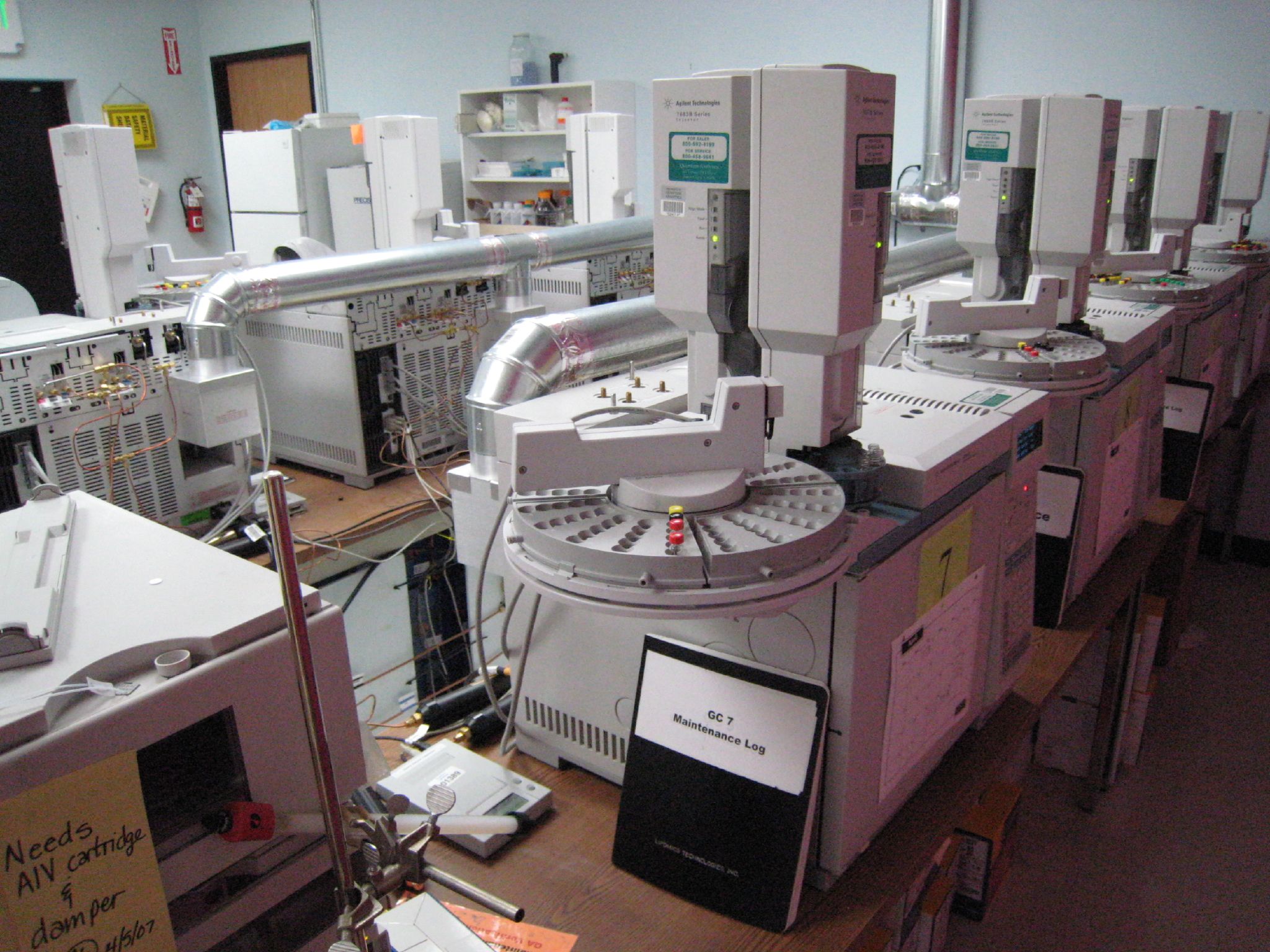
Integration of liquid chromatography-tandem mass spectrometry into total laboratory automation: technical challenges and clinical advantages
The clinical laboratory is undergoing a paradigm shift toward the integration of liquid chromatography-tandem mass spectrometry(MS) into Total Laboratory Automation workflows. While historically relegated to specialized satellite units due to manual pre-analytical requirements, recent technological advancements have enabled the development of fully automated, 'sample-to-result' MS modules. This review provides an authoritative analysis of the technical integration of systems such as the Roche cobas® i 601 and Sh…
Machine Learning-Driven Noninvasive Prediction of Liver Fibrosis in Unclassified Liver Disease
Chronic liver diseases (CLDs) frequently progress silently to advanced fibrosis or cirrhosis, yet existing predictive models have largely been developed for patients with clearly defined etiologies. Here, we asked whether a noninvasive machine-learning model based on routine clinical variables and liver stiffness measurement (LSM) could accurately identify significant liver fibrosis in patients with CLD of uncertain etiology, and whether such a model would add value beyond conventional fibrosis scores for clinic…

Mechanistic insight into Metabolic Activation Mechanism of Aniline Disinfection Byproducts catalyzed by P450 Enzymes from Distinct Species: N-hydroxylation Mechanism
Disinfection by-products (DBPs) are emerging environmental pollutants generated from reactions between disinfectants and precursor compounds in the water treatment, which pose a serious toxicity effect to the ecological environment and human health. Metabolism, especially by P450 enzymes, is responsible for both the toxification and detoxification of xenobiotics in humans and other organisms. Multidisciplinary theoretical approaches utilizing density functional theory (DFT), quantitative structure-activity relat…


Exploring AI tool adoption in higher education: evidence from a PLS-SEM model integrating multimodal literacy, self-efficacy, and university support
Introduction: Framed within the technology acceptance model, this study examines how multimodal literacy, self-efficacy, and university support affect students' attitudes toward artificial intelligence tools and the students' intentions to adopt them. Methods: Survey data from 498 students were analyzed using PLS-SEM 4.0 and SPSS 29. Results: The findings showed that the perceived usefulness of the AI tools was the strongest predictor of both attitude toward the tools and intention to use them. All three anteced…
Frontiers in PsychologyThe Human Side of Technology: How Yitian Li Approaches Product Design and AI
Li's recent project Quriosity puts that philosophy into practice. The AI-powered curiosity engine allows children to scan everyday objects and turn them into continuing journeys of discovery, combining voice conversations, guided exploration, personal collections, and AI recommendations into a system designed to sustain curiosity rather than simply answer questions.

Exploring the Impact of Generative AI ChatGPT on Critical Thinking in Higher Education: Passive AI-Directed Use or Human–AI Supported Collaboration?
Generative AI is weaving into the fabric of many human aspects through its transformative power to mimic human-generated content. It is not a mere technology; it functions as a generative virtual assistant, raising concerns about its impact on cognition and critical thinking. This mixed-methods study investigates how GenAI ChatGPT affects critical thinking across cognitive presence (CP) phases. Forty students from a four-year university in the southwestern United States completed a survey; six provided their Cha…
Delhi University Launches AI Film Making Certificate Course, Check Duration And Skills
University of Delhi launches a three-month Certificate Course in AI Film Making through its Campus of Open Learning.

Generative AI and the Information Society: Ethical Reflections from Libraries
The integration of generative artificial intelligence (generative AI) into library systems is transforming the global information society, offering new possibilities for improving information access, management, and dissemination. However, these advancements also raise significant ethical concerns, including algorithmic bias, epistemic injustice, intellectual property conflicts, data privacy breaches, job displacement, the spread of misinformation, and increasing digital inequality. This review critically examin…

MI5 China alert will send chill through UK’s cash-strapped universities
The security alert issued by MI5 regarding a Chinese state-owned conglomerate accused of conducting espionage in the UK reveals the extent to which British intelligence remains concerned about Beijing’s influence, and risks casting a shadow over UK-China cooperation at a time when the bilateral relationship is enjoying a revival. The UK’s domestic security service on Wednesday warned researchers and academics to cease work with the China Academy of General Technology (CAGT), an organisation MI5 described as a “s…


AI-Made Film Cost $1.5 Million
Abstract: Director Tom Walsh said he produced the two-hour film for $1.5 million, perhaps serving as a test case for the types of projects AI can help make.
VarietyTop evidence-backed gains
- A SnSe/SnO2 p-n heterojunction single-sensor virtual electronic nose using a PCA-KNN framework enables room-temperature, non-contact detection and classification of volatile sulfur compounds released during methamphetamine production and trafficking, with high response to low-concentration H2S and 96.7% accuracy for H2Score 84 · 1 sources
- An interpretable multi-instance learning method for accurate differentiation of malignant and benign laryngeal lesions in laryngoscopy: Results IMIL-Net achieved the highest diagnostic performance, with a mean area under the curve (AUC) of 0.975 (95% CI 0.959-0.991), accuracy of 0.915 (95% CI 0.883-0.947), sensitivity of 0.876 (95% CI 0.803-0.949), and specificity of 0.945 (95% CI 0.910-0.980).Score 84 · 1 sources
- Systematic review of 35 studies found classical AI models for bipolar disorder achieved pooled AUC 0.80 for long-term maintenance response and 85%-97% accuracy for safety and dose optimization.Score 83 · 1 sources
Top evidence-backed problems
- Finally, we demonstrate how Microbial Community-scale Metabolic Modeling (MCMM) and multimodal machine learning mechanistically couple specific dietary inputs with unique microbiome responses, yielding up to 95% diagnostic accuracy in differentiating diet-responsive metabolic states and individualized postprandial glycemic outcomes.Score 84 · 1 sources
- A two-layer DNN is trained using the Levenberg-Marquardt algorithm with a 70%-15%-15% data split.Score 84 · 1 sources
- Chatbots failed to answer 4.2% of interactions, received negative ratings for insufficient detail, and showed only 45% full guideline adherence with weak agreement between LLM and physician assessments.Score 83 · 1 sources