 ace
aceThe Human Side of Technology: How Yitian Li Approaches Product Design and AI
Li's recent project Quriosity puts that philosophy into practice. The AI-powered curiosity engine allows children to scan everyday objects and turn them into continuing journeys of discovery, combining voice conversations, guided exploration, personal collections, and AI recommendations into a system designed to sustain curiosity rather than simply answer questions.
In brief
On 2026-10-10, TechBullion described Yitian Li's recent project Quriosity as an AI-powered curiosity engine that allows children to scan everyday objects and turn them into continuing journeys of discovery.
The approach matters because it shifts AI use in children's learning from single answers to sustained exploration, but the source provides no evidence of measured learning outcomes, adoption scale, or evaluation of risks for this age group.
Main points
- Project is named Quriosity and is described as Li's recent project putting a human-centered philosophy into practice.
- System combines voice conversations, guided exploration, personal collections, and AI recommendations.
- Design goal is to sustain curiosity rather than simply answer questions.
The gain
Quriosity provides an AI-powered system that lets children scan everyday objects and sustain curiosity through continuing journeys of discovery using voice conversations and guided exploration.
The rundown
The engine is framed as an implementation of Li's approach to product design and AI, emphasizing human side of technology.
Functionality includes scanning physical objects, then generating continuing journeys that integrate voice conversations, guided exploration, personal collections, and AI recommendations.
Sources
- JournalismTechBullion2026-10-10

Exploring AI tool adoption in higher education: evidence from a PLS-SEM model integrating multimodal literacy, self-efficacy, and university support
Frontiers in PsychologyExploring the Impact of Generative AI ChatGPT on Critical Thinking in Higher Education: Passive AI-Directed Use or Human–AI Supported Collaboration?
Education Sciences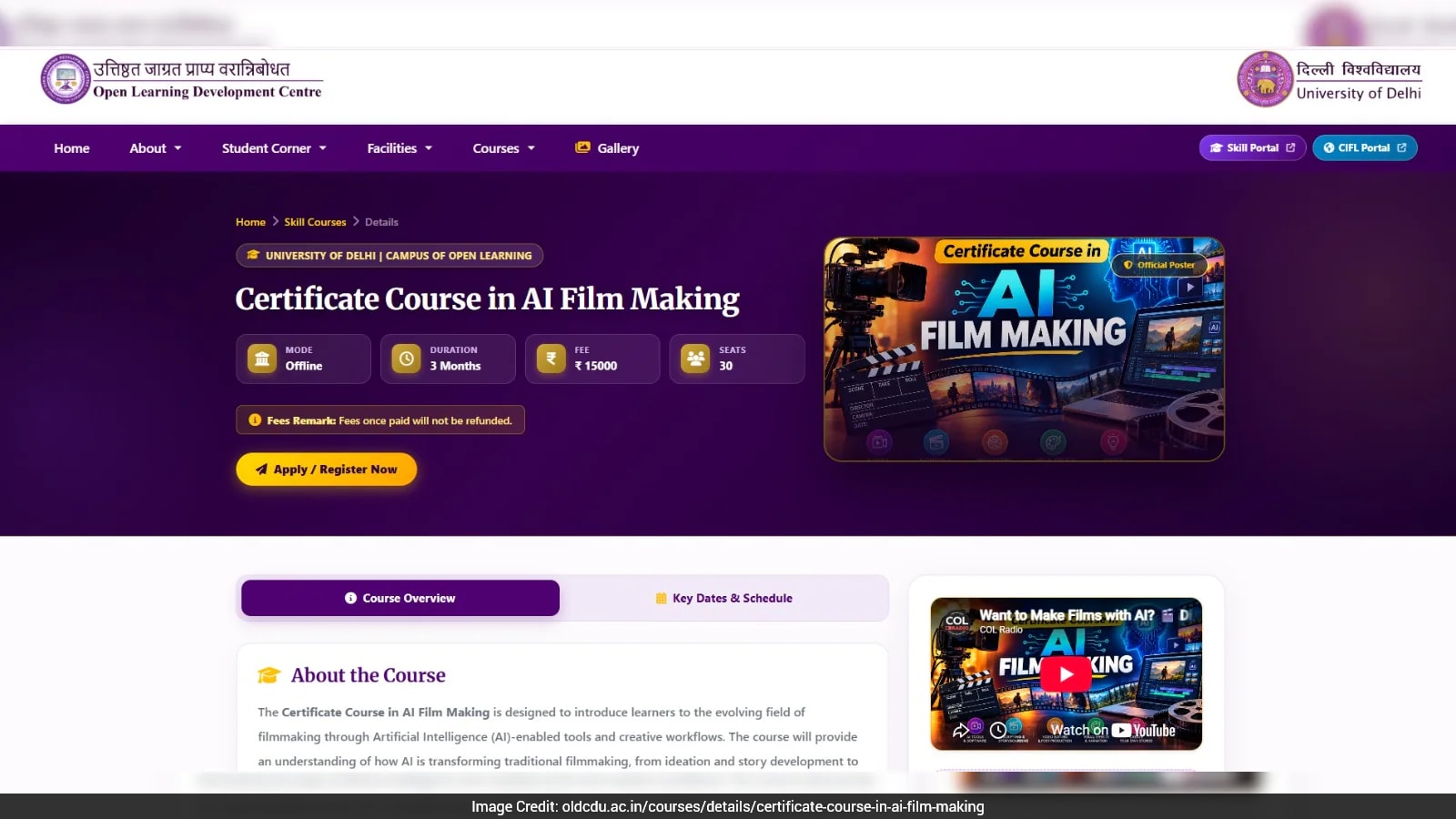
Delhi University Launches AI Film Making Certificate Course, Check Duration And Skills
NDTV.com
The debate