Visual Art & Design

2 gains2 Traces9 problems

AI in visual art and design: 13 records so far

Every measured gain and problem on the record for this topic, newest first.Too few to weigh yet. Updated .

The count11 more give context

One square per record, darker for stronger evidence:Evidence: 0 high7 moderate6 emerging

Too few to weigh yet. Is your study missing? Add it

The records

Page 1 of 2

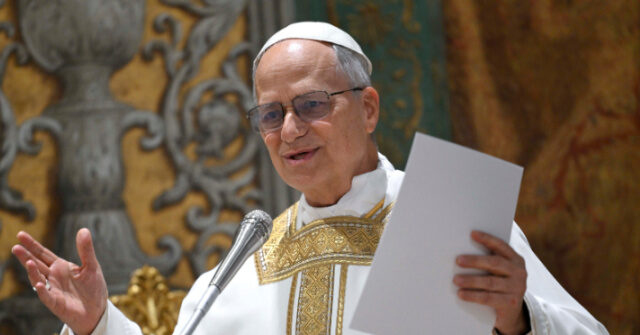
'Urgent to Distinguish Human Art'

'Urgent to Distinguish Human Art'

According to a report published 2026-10-03, Pope Leo XIV defended human art over art created by AI and called for the church to renew an alliance with artists.

Media & Arts

Marine agency AI art contest sparks backlash

On August 17, 2026, the Bangkok Post reported that the Department of Marine and Coastal Resources faced strong criticism after announcing winners of an AI art contest held for National Dugong…

Marine agency AI art contest sparks backlash
ProblemMedia & Arts

AI takes centre stage at Photo Brussels 2025

In January 2025, Photo Brussels festival at the Hangar gallery exhibited 17 projects that use AI text-to-image tools to make photographs, curated by Michel Poivert.

AI takes centre stage at Photo Brussels 2025

AI in visual art and design

The records so far

The count

Gains
2
Traces
2
Problems
9

A Trace is one record with both a gain and a problem, so it counts on both sides: 4 records show a gain and 11 show a problem. 11 context records are in the record list but not counted, because they report no measured gain or problem.

How strong the evidence is

EvidenceGain sideProblem side
HighStrong study design, backed by at least two independent sources00
ModerateA measured study or an official source35
EmergingEarly, small, unreviewed or reported second-hand16

By type of evidence: 4 news reports; 2 systematic reviews or meta-analyses; 2 interview studies; 2 controlled comparisons; 2 surveys; 1 observational study. How evidence is scored

13 records so far, too few to weigh yet. A written summary appears once a topic has at least 20 counted records, with at least 5 on each side. Is your study missing? Add it

Strongest gains

  1. A neural network beat artists and viewers at predicting which artworks people remember

    Across three recognition experiments with US adults, the ResMem neural network predicted which artworks would be remembered more accurately than laypeople or the artists who made them.

    Controlled or validated comparison · Evidence: Moderate · 70/100 · TRV-2026-1786
  2. Online participants could judge and describe AI art prompts, but lacked the style words to make good ones

    In three studies, crowdsourced participants could tell good AI art prompts from weak ones and wrote descriptive prompts for text-to-image generation.

    Controlled or validated comparison · Evidence: Moderate · 68/100 · TRV-2026-0275
  3. AI image tools tied to 25% more art and 50% more favorites per view, but lower average novelty

    Among more than 50,000 artists in an online art community, adopting text-to-image AI was linked to a 25% rise in creative productivity and a 50% rise in favorites per view.

    Observational study · Evidence: Moderate · 65/100 · TRV-2026-0604

Strongest problems

  1. Artists fear displacement by AI image generators, a review of 38 publications found

    A review of 38 publications found human artists fear displacement by AI image generators, while consumers and galleries criticize AI art.

    Systematic review or meta-analysis · Evidence: Moderate · 70/100 · TRV-2026-0491
  2. Meta-analysis finds viewers rate art lower once they know AI made it

    A meta-analysis of studies on audience responses found that knowing AI was used to make visual art lowered ratings, with a small negative effect for sensory-motor and emotion-valuation measures and a moderate one for knowledge-meaning measures.

    Systematic review or meta-analysis · Evidence: Moderate · 70/100 · TRV-2026-2723
  3. AI art users weighted control above training-data bias, a survey of 426 found

    In a survey of 426 AI art platform users, cultural bias in training data and algorithmic transparency were weighted lower than control over results and ease of customizing models, which the authors read as limited awareness.

    Survey · Evidence: Moderate · 50/100 · TRV-2026-0882