 ace
aceuse of generative AI to create entries for the Brisbane portrait prize
Source article: Artists boycotted this portrait prize over AI entries. Now they’re back to take them on
Poised above the lady in the red dress is a claw. Its metallic fingers grasp to pluck its prize from a jumble of other women while she looks dreamily upward, as if to say “Who, me?” The woman in the red dress is Australian comedian Alice Fraser, as photographed on stage. The other women – generic superheroes and 1950s housewives – were created using the generative AI software Krea. “It is the human being chosen over the AI element,” artist Jackie Ryan says. “But is being chosen a good thing?” Ryan’s work The Cat…

Both sides are scored from claims and sources, not community votes.
G 55The G score combines the specificity and measured human impact of the grounded gain claim with the strength of this Trace’s cited sources.In brief
The Brisbane portrait prize opened to declared AI-generated art in 2024, sparking boycotts from former winners. In 2026, finalist Jackie Ryan exhibited The Catch, which combines a photograph of comedian Alice Fraser with figures generated in Krea, while previously boycotting First Nations artists led by Birrunga re-entered with self-portraits.
The case shows how a regional portrait prize became a test site for AI in visual art, raising questions about what counts as art, how prizes should handle disclosure, and whether acceptance signals permission to harvest cultural IP. Uncertainty remains about how judges weigh AI-assisted versus traditional works and how First Nations protections will be enforced.
Main points
- Brisbane portrait prize opened its doors to declared AI-generated art in 2024, including for the $50,000 Lord Mayor's prize.
- Artist Jackie Ryan used Krea to generate background figures for her finalist work The Catch featuring comedian Alice Fraser.
- Former winners including photographer Russell Shakespeare and Wiradyuri artist Birrunga boycotted the prize over the AI policy.
- In 2026, Birrunga and five First Nations artists chose to re-enter with self-portraits emphasizing ancestral integrity.
The gain
Artist Jackie Ryan used generative AI software to produce elements of a portrait that became a finalist in the Brisbane portrait prize after the prize opened to declared AI works.
The problem
Artists argued that allowing AI-generated entries devalues art as lacking cultural content and risks encouraging harvesting of First Nations cultural IP.
The rundown
The Brisbane portrait prize made headlines in 2024 when it explicitly allowed declared AI-generated works to compete for major prizes, at a time other art prizes were caught awarding AI works unknowingly. The decision prompted public boycotts from former winners.
Jackie Ryan described her process of photographing comedian Alice Fraser and then prompting Krea to encase her in a claw machine filled with generic figures, iterating with prompts like 'add feminist tropes' and 'Apply Ben Day dots'.
Critics framed AI work as 'decoration, illustration at best' without connection to generations of practice, while Birrunga's group returned in 2026 to pit 'AI against AI' with paintings centered on ancestral integrity.
Sources
- JournalismThe Guardian2026-09-17
How this company uses AI to recover millions in hidden music royalties
WIS10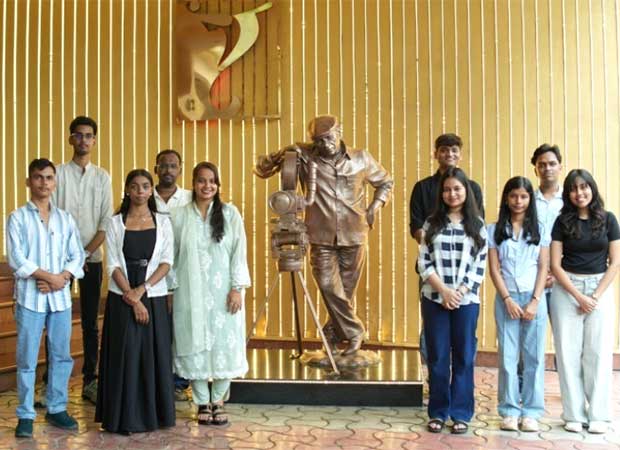
Yash Chopra Foundation opens doors to Robotics and AI dreams: 11 children of film industry workers win scholarships worth up to Rs. 5 lakhs
Bollywood Hungama
GenAI in journalism: An ethical analysis of implications, best practices, and challenges
Online Journal of Communication and Media Technologies
The debate