 ace
aceApplications and Advances of Machine Learning in the Development of Solid-State Electrolytes for Lithium-Ion Batteries
Solid-state electrolytes (SSEs) have attracted considerable attention for their ability to effectively suppress lithium dendrite growth and enhance the safety and life cycle of lithium-ion batteries (LIBs). However, the commercialization of SSEs has been hindered by low ionic conductivity, limited mechanical strength, and poor interfacial compatibility. Recently, machine learning (ML) has arisen as a helpful tool in SSE studies owing to its efficient data processing and pattern recognition capabilities. This pap…
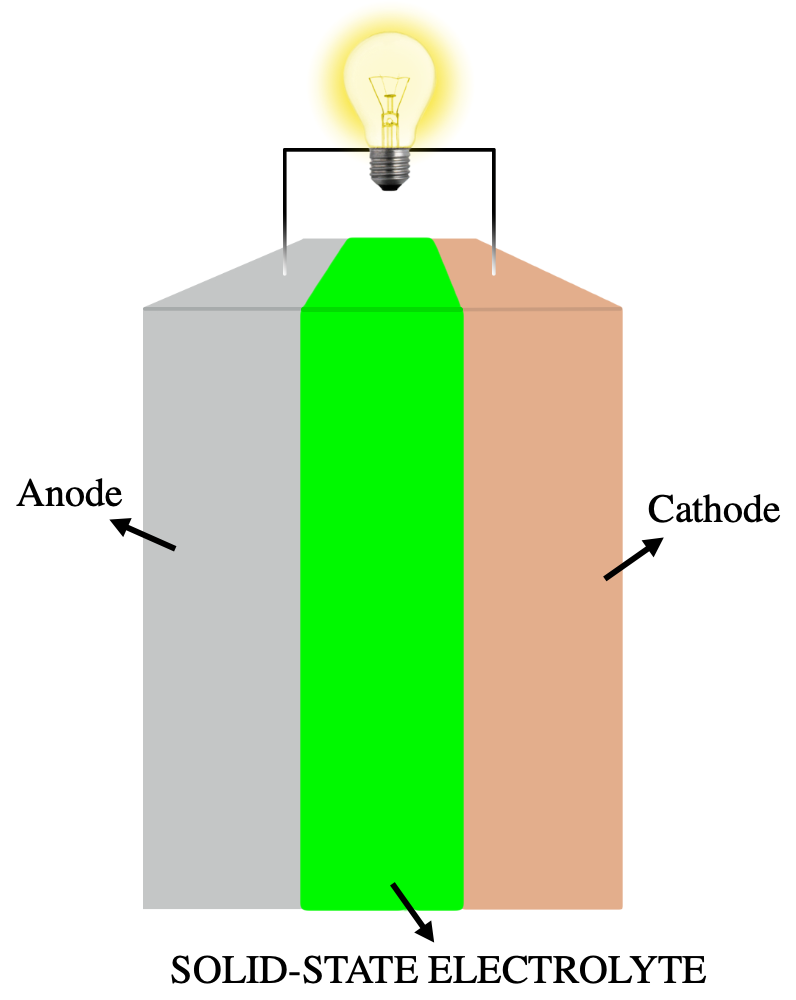
In brief
On Dec 1, 2025, a review in ACS Omega surveyed machine learning for solid-state electrolytes for lithium-ion batteries. It described how SSEs can suppress lithium dendrite growth and improve safety and cycle life, but commercialization is limited by low conductivity, mechanical strength, and interfacial compatibility, prompting use of ML for data processing and pattern recognition.
The synthesis matters because it frames ML as a practical accelerator for battery materials discovery rather than a speculative tool, linking database building, descriptor engineering, and property prediction. Uncertainty remains around how generalizable models are across chemistries and how interpretability and metric choices affect trust in predicted conductivity, moduli, and stability.
Main points
- Review covers SSE database creation strategies for ML training.
- Focus on descriptor selection and its strong influence on predictive performance for SSE properties.
- Covers predictive models and generative models applied to ionic conductivity, elastic moduli, and thermodynamic stability.
- Includes systematic analysis of interpretability and evaluation metrics of ML models.
The gain
Machine learning accelerates solid-state electrolyte development by efficiently predicting ionic conductivity, elastic moduli, and thermodynamic stability to enable rapid next-generation design.
The rundown
The review organizes recent work into database creation strategies, descriptor selection, and application of predictive and generative ML algorithms to SSE property prediction.
It emphasizes that descriptor choice strongly influences model performance and that systematic comparison of interpretability and evaluation metrics is needed to guide next-generation SSE discovery.
Sources
- Peer-reviewedACS Omega2025-12-01

G4-Attention: an interpretable and lightweight deep learning framework for DNA G-quadruplex prediction
Physical Chemistry Chemical Physics
From scrap to prime: Designing high-performance alloys from dirty feedstocks with machine learning
Science Advances
Artificial Intelligence Use in Honours Research: Implications for Supervision Relationships, Knowledge Development, and Research Quality
International Journal of Business Ecosystem & Strategy (2687-2293)
The debate