 ace
aceRadiomics and dosiomics in radionecrosis prediction in brain metastasis treated with Stereotactic Radiation Therapy: a machine learning approach
Abstract: Introduction Stereotactic Radiotherapy plays a main role in Brain Metastases treatment. Radiomics and Dosiomics, coupled with Machine Learning approaches are emerging in radiation oncology as support in clinical decision-making workflow. In this study a machine learning approach was used to predict the late toxicities induced by Stereotactic Radiotherapy including clinical, radiomics and dosiomics features extracted from patients. Materials and methods Lesions contribution, concomitant and/or sequential treatmen…
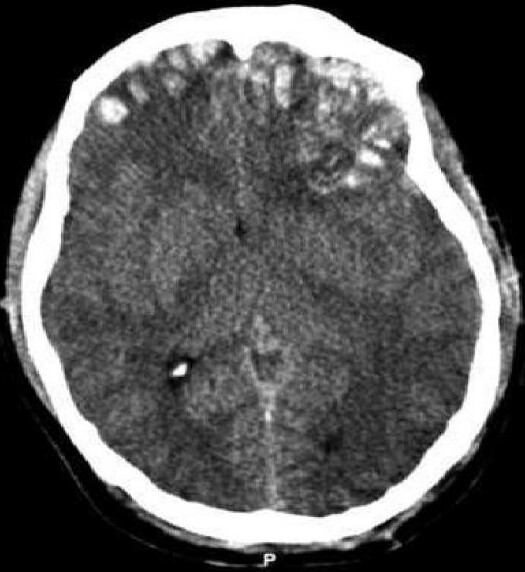
"Brain trauma CT" by Rehman T, Ali R, Tawil I, Yonas H is licensed under CC BY 2.0. To view a copy of this license, visit https://creativecommons.org/licenses/by/2.0/.
In a study published September 13, 2026, investigators applied eleven machine learning models to predict late radionecrosis after stereotactic radiotherapy for brain metastases. Using data from 37 patients with 113 lesions, where radionecrosis occurred in 18.6% of lesions, they tested four feature combinations of clinical, radiomics and dosiomics data after a 70:30 split and feature selection and balancing steps.
Accurate prediction of radionecrosis matters because it is a serious late toxicity that affects quality of life and treatment decisions in brain metastasis care. While the models achieved ROC-AUC values up to 80%, the small cohort size and wide confidence intervals leave uncertainty about performance in larger, diverse populations and about prospective clinical benefit.
- Study included 37 patients with 113 brain metastases, with radionecrosis observed in 21 lesions (18.6%).
- Four feature sets were tested: clinical alone, clinical & radiomics, clinical & dosiomics, and combined clinical-radiomics-dosiomics.
- Data were split 70:30 training:test with feature selection via selectFromModel and selectKBest and SMOTE balancing applied to training cohort.
- Best ROC-AUC results were 80% for K-Nearest Neighbors on clinical data and 80% for Extra Trees on clinical & radiomics data.
Machine learning models trained on clinical, radiomics and dosiomics features predicted radionecrosis after stereotactic radiotherapy for brain metastases with ROC-AUC up to 80%, offering decision support that may improve patient-specific treatment and reduce radiotherapy-induced toxicity severity.
The rundown
Researchers extracted clinical, radiomics and dosiomics features from patients treated with stereotactic radiotherapy for brain metastases and investigated lesions contribution and concomitant and/or sequential treatments. They evaluated eleven machine learning models across four datasets after a 70:30 training-test split with selectFromModel, selectKBest and SMOTE balancing on the training cohort.
All models retained patients' age at RT and primary cancer diagnosis as clinical features. Reported best ROC-AUC values were 80% for clinical data, 80% for clinical & radiomics, 75% for clinical & dosiomics with Logistic Regression, and 76% for the combined dataset with Random Forest, each with broad confidence intervals such as 55-97% and 50-94%.
Sources
- Peer-reviewedPhysica Medica2026-09-13
How should this claim be treated?
The debate