 ace
aceDutch AI company designs new polymers to specification in weeks instead of years
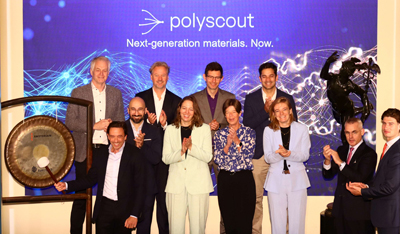
TNO launches polySCOUT, an independent Dutch AI company that designs polymers to specification. Target properties and regulatory constraints go in; lab-validated candidate materials come out. Where the design and selection phase of a new polymer typically takes years, polySCOUT brings it down to weeks. The technology has been developed within TNO since 2022, and TNO becomes a shareholder in the new company. Amsterdam, the Netherlands – TNO launches polySCOUT, an independent Dutch AI company that designs polymer…
In brief
TNO has spun out polySCOUT, an independent Dutch company in Amsterdam that uses AI to design polymers. Users enter the properties they want and the regulatory limits that apply, and the system proposes candidate materials that have been validated in the lab.
The claim matters because polymer design and selection normally takes years, so a much shorter cycle could change how materials are developed. The excerpt gives no independent performance data, example materials, or customer results, so the speed claim is the company's own and remains unverified.
Main points
- polySCOUT is launched as an independent Dutch AI company focused on designing polymers to specification.
- Inputs are target properties and regulatory constraints; outputs are lab-validated candidate materials.
- The company says design and selection, which typically takes years, is reduced to weeks.
- The underlying technology has been developed within TNO since 2022.
- TNO becomes a shareholder in the new company.
The gain
An AI system takes target properties and regulatory constraints and returns lab-validated candidate polymers, cutting design and selection from years to weeks.
The rundown
The announcement is datelined Amsterdam and describes polySCOUT as an independent company created by TNO. It presents the venture as a way to design polymers that meet specified performance targets and regulatory requirements.
The article says the technology has been under development inside TNO since 2022, and that TNO keeps a shareholding in the spin-off. The supplied text is truncated and offers no further detail on methods, validation results, or commercial customers.
Sources
- JournalismRubberWorld2026-10-15

A spatial-temporal deep learning method for heavy metal ion detection
The Analyst
Large language models unlock the ecology of species interactions
Proceedings of the National Academy of Sciences
Informed forecasting: Leveraging auxiliary knowledge to boost large language model performance on time series forecasting
PLOS One
The debate