Trace: a gain and a problemThe Trace newest first

All traces

“A Trace? What’s that?”

A Trace is when we’ve traced both a gain and a problem back to the same subject. Each side is then scored out of 100 on the strength of its evidence.

372 traces so far

Health

AI cut screening time over 95% in a brittle bone review, but showed bias in rating trials

Study title: Artificial Intelligence for Evidence Synthesis of Emerging Biologics to Improve Skeletal Health in Osteogenesis Imperfecta: Systematic Review and Meta-Analysis

Close call, 1 apart

Artificial Intelligence for Evidence Synthesis of Emerging Biologics to Improve Skeletal Health in Osteogenesis Imperfecta: Systematic Review and Meta-Analysis

The gain

Using GPT-4o to screen studies for a review of 13 brittle bone disease trials cut total screening time by over 95%, with 97.4% sensitivity at abstract level, 88.9% at full text and substantial agreement with humans (kappa 0.778).

Journal of Medical Internet Research

The problem

In a review of 13 brittle bone disease trials, GPT-4o showed optimism and positional biases when assessing risk of bias, so scaling this workflow will still need explicit human oversight.

Journal of Medical Internet Research
Health

Chatbot nipple discharge advice was 87.5% safe in a simulated test; 8 of 216 could mislead

Study title: Triage safety of patient-facing AI chatbots for nipple discharge: A guideline-informed assessment of red-flag recognition and patient actionability

Close call, 1 apart

Triage safety of patient-facing AI chatbots for nipple discharge: A guideline-informed assessment of red-flag recognition and patient actionability

The gain

Across 216 simulated responses from six chatbots, 87.5% were rated safe and red-flag warning features were recognised 90.6% of the time.

International Journal of Medical Informatics

The problem

In simulated tests of six chatbots, 3.7% of responses (8 of 216) were potentially misleading and 8.8% had minor omissions, often from missed red flags or vague next steps.

International Journal of Medical Informatics
Health

Thinner chest CT slices found hidden coronary calcium in 19.0% of patients in one study group

Study title: Quantifying the impact of slice thickness on cardiovascular risk stratification in lung cancer screening: a multi-center "RESCUE" study

Close call, level

Quantifying the impact of slice thickness on cardiovascular risk stratification in lung cancer screening: a multi-center "RESCUE" study

The gain

Re-reading existing thin-slice chest CT with AI moved 19.0% of internal-cohort patients and 10.2% of NLST participants from a coronary calcium score of zero to above zero, with no extra radiation.

Quantitative Imaging in Medicine and Surgery

The problem

Standard 5.0 mm chest CT missed mild coronary calcium in 19.0% of internal-cohort patients and 10.2% of NLST participants, and 31% of symptomatic patients scored zero had obstructive disease above 50% stenosis.

Quantitative Imaging in Medicine and Surgery
Health

AI beat heart risk scores, yet 82% of studies had racial or ethnic bias, a review found

Study title: Embedded transparency in artificial intelligence: a prerequisite for equity and representation in AI-enabled clinical trials

Close call, 2 apart

Embedded transparency in artificial intelligence: a prerequisite for equity and representation in AI-enabled clinical trials

The gain

In a meta-analysis of 27 studies covering over 568,000 patients, machine learning predicted coronary artery disease risk better than traditional methods, with a pooled C-statistic of 0.82 versus 0.73.

International Journal of Innovative Technologies in Social Science

The problem

A recent review found racial or ethnic bias in 82% of cardiovascular AI studies; most models were validated only retrospectively, and many are opaque or trained on narrow datasets.

American Journal of Advanced Technology and Engineering Solutions
Health

At one hospital, specialist X-ray AI beat ChatGPT-4o, but 25.2% of reports were inconsistent

Study title: Performance evaluation of domain-specific and general-purpose AI models for chest radiograph interpretation: a comparative study

Close call, 1 apart

Performance evaluation of domain-specific and general-purpose AI models for chest radiograph interpretation: a comparative study

The gain

On 500 chest X-rays from one hospital, the specialist AI fully agreed with reference findings in 55.8% of cases versus 19.8% for ChatGPT-4o, and assisted reporting took 16.3 seconds versus 179.2 unaided.

BMC Medical Imaging

The problem

In a study of 500 chest X-rays, the specialist AI's reports were still inconsistent with reference findings in 25.2% of cases (ChatGPT-4o: 46.4%), and it did not significantly change RADPEER discrepancy rates versus original interpretation.

BMC Medical Imaging
Health

A review says AI nears or beats radiologists in chest and breast screening, but risks remain

Study title: Seeing beyond the algorithm: artificial intelligence and the enduring role of the radiologist

Gain higher by 6

The gain

A narrative review reports AI reached diagnostic performance approaching or exceeding radiologists in chest imaging and breast cancer screening, and improved triage and cut report turnaround times.

Clinical Breast Cancer

The problem

A narrative review warns that automation bias, over-reliance on algorithm output, and, when AI is poorly implemented, higher workload and burnout could undermine radiologists' judgment and net benefit.

Diagnostics
Health

30.4 to 5.7 minutes per study: GPT sped data extraction but often differed from humans on bias

Study title: Custom GPT models for complex rheumatology systematic reviews: A two-part evaluation of data extraction and prognosis appraisal

Gain higher by 8

The gain

Custom GPT models completed all QUIPS domain judgments and reduced data-extraction time from 30.4 to 5.7 minutes per study in rheumatology systematic reviews.

DIGITAL HEALTH

The problem

GPT-Reviewer showed near-zero agreement with human QUIPS ratings for study participation and outcome measurement, with kappa 0.001.

DIGITAL HEALTH
Health

AI stroke scan tool caught 94% of proximal blockages but only 73% of distal M1 ones in one center

Study title: Artificial Intelligence-Based CTA Software for Real-World Detection of Large Vessel Occlusion in Acute Ischemic Stroke

Close call, 1 apart

Artificial Intelligence-Based CTA Software for Real-World Detection of Large Vessel Occlusion in Acute Ischemic Stroke

The gain

In 531 stroke scans at one center, the Brainomix e-CTA software detected large vessel blockages with 84% sensitivity and 95% specificity, and readers of all experience levels reached a diagnosis faster with it.

European Neurology

The problem

A single-center study found the software's sensitivity fell to 73% for distal M1 blockages, with only moderate agreement with experts; non-target occlusions were excluded from the main analysis, so it needs expert review rather than standalone use.

Diagnostics
Israeli command system identified 850,000 targets in Gaza and Lebanon wars, says supplier

The gain

Elbit Systems said its Tzayad digital army programme, which uses AI to support tactical decision-making, sped up fire support and detected 850,000 real-time intel targets across Gaza and Lebanon.

The Guardian

The problem

Experts said soldiers could not thoroughly assess collateral damage and civilian risk at about 1,000 targets a day flagged by the AI-assisted Tzayad system; WHO reports 71,269 Palestinians killed in Gaza to end of 2025.

The Guardian
Elon Musk’s xAI sues Colorado over new rules for artificial intelligence

The gain

Colorado's 2024 AI law would require AI developers to implement safeguards to protect residents from algorithmic discrimination in education, employment, healthcare, housing and financial services.

The Guardian

The problem

xAI sued Colorado to block its AI anti-discrimination law, creating legal uncertainty over whether states can enforce safeguards on AI developers.

The Guardian
Media & Arts

Online participants could judge and describe AI art prompts, but lacked the style words to make good ones

Study title: Prompting AI Art: An Investigation into the Creative Skill of Prompt Engineering

Close call, level

The gain

In three studies, crowdsourced participants could tell good AI art prompts from weak ones and wrote descriptive prompts for text-to-image generation.

International Journal of Human–Computer Interaction

The problem

In three studies, crowdsourced participants lacked the style-specific vocabulary needed to write prompts that produced high-quality AI art, suggesting the skill must be learned.

International Journal of Human–Computer Interaction
Health

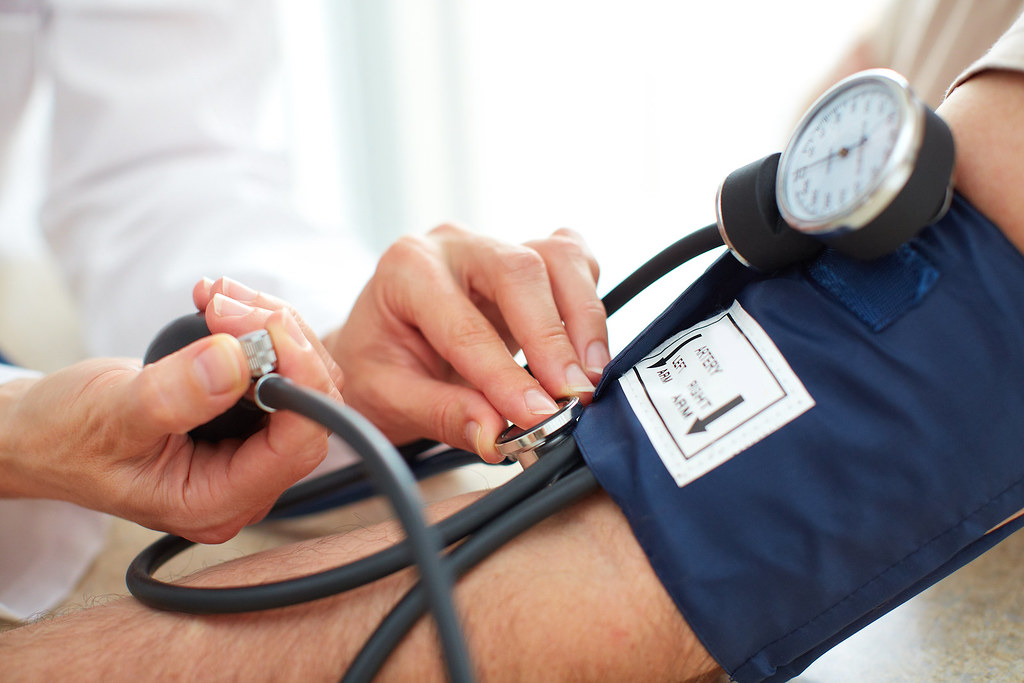
AI often beat standard risk scores on blood pressure; few studies show fewer heart events, a review found

Study title: Clinical applications of artificial intelligence in hypertension management: current evidence and future perspectives

Close call, 3 apart

Clinical applications of artificial intelligence in hypertension management: current evidence and future perspectives

The gain

A review found machine learning models often outperformed conventional risk scores at predicting hypertension and cardiovascular risk, with AUCs of 0.75 to 0.90, though mostly in retrospective data.

Herz

The problem

A review found most AI hypertension studies were retrospective without strong external validation, and few showed fewer cardiovascular events or deaths, leaving clinical value uncertain.

Herz
Health

AI outlines stroke damage well on MRI, far less so on CT, a 40-study review found

Study title: Artificial Intelligence in Ischemic Stroke Lesion Segmentation: A Narrative Review of Deep Learning Methods, Clinical Utility, and Future Directions

Close call, 4 apart

Artificial Intelligence in Ischemic Stroke Lesion Segmentation: A Narrative Review of Deep Learning Methods, Clinical Utility, and Future Directions

The gain

In a review of 40 studies, AI tools outlined stroke damage on MRI with many scoring above 0.80 on a 0-to-1 overlap measure, and recent multisite models approached 0.90.

Journal of Imaging Informatics in Medicine

The problem

On CT scans, AI outlining of stroke damage was far less accurate and more variable, scoring about 0.35 to 0.65, and the evidence was mostly retrospective, so real-world performance is unproven.

Journal of Imaging Informatics in Medicine
Health

A 20-question test found chatbots matched gum specialists on accuracy; Gemini was less concise

Study title: Comparison of artificial intelligence-based chatbots and expert periodontists in responding to patient questions: a multi-dimensional analysis

Gain higher by 5

Comparison of artificial intelligence-based chatbots and expert periodontists in responding to patient questions: a multi-dimensional analysis

The gain

Blinded periodontologists rated ChatGPT, Gemini and Claude answers to 20 patient questions as equally accurate as expert periodontists' answers (p = 0.425), and higher on completeness and empathy (both p < 0.0001).

BMC Oral Health

The problem

In a 20-question test, Gemini scored lower than the periodontists on conciseness and focus, and clarity differed only between ChatGPT and Gemini, with experts using fewer, more focused expressions.

BMC Oral Health
Health

AI spots enlarged hearts on X-rays in 0.05 seconds, but accuracy fell to 76% on new data

Study title: AI-Assisted cardiomegaly screening via implicit morphological inference and human-in-the-loop validation

Close call, level

AI-Assisted cardiomegaly screening via implicit morphological inference and human-in-the-loop validation

The gain

A small AI model screened chest X-rays for enlarged hearts in 0.05 seconds per image, reaching 90.31% accuracy on NIH data and 93.63% and 91.21% on NIH and OpenI after expert correction.

Journal of X-Ray Science and Technology

The problem

Fully automated accuracy fell to 76.07% on the external OpenI dataset, versus 90.31% on NIH, showing the model struggles when data differs from its training images.

Journal of X-Ray Science and Technology