 ace
Moderate evidence
More
Staff at the US center for AI safety are reporting to the White House, raising independence concerns
- Evidence type
- Investigative reporting
- Sources
- 1 sourceJournalism
- Published
- 3 min read
- Truvace record
- TRV-2026-2439cite or check it
With public anxiety growing over mounting reports about out-of-control artificial intelligence agents, the tiny U.S. government division charged with assessing the safety of new AI offerings lacks a permanent leader and has stopped publishing its research. SAN FRANCISCO (AP) — With public anxiety growing over mounting reports about out-of-control artificial intelligence agents, the tiny U.S. government division charged with assessing the safety of new AI offerings lacks a permanent leader and has stopp
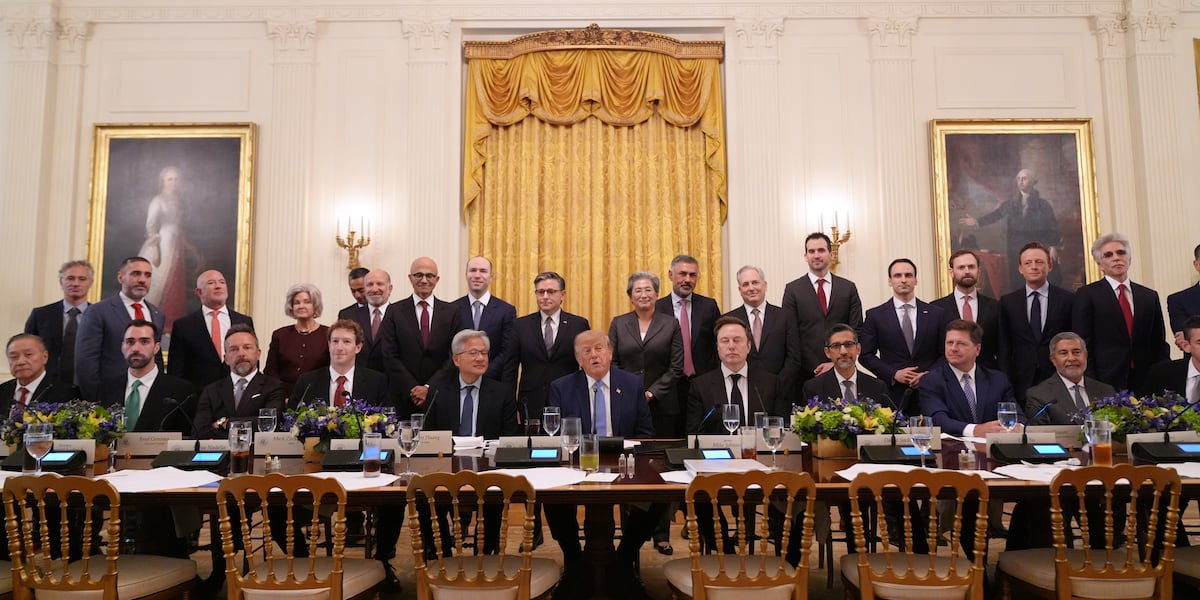
The problem
The Commerce Department's AI safety center, funded at $10 million a year, has gone without a permanent director since the summer, stopped publishing its safety reports and been asked to report informally to a White House office, which critics say weakens independent checks.
In brief
The Commerce Department's Center for Advancing Innovation and Standards for Super Intelligence (CAISSI), the small US body that assesses new AI systems, has no permanent leader and has stopped publishing its research. Two former officials told the AP its staff were recently asked to informally report to a White House office.
Critics worry the arrangement could politicize decisions touching on cybersecurity and bioweapons, and that findings could be muted in deference to an industry that largely polices itself. Others argue closeness to President Trump could give the center more prominence and funding.
The White House did not answer specific questions about CAISSI. It said Trump had established a Super Intelligence Force and commissioned a risk report from his science and technology advisers. How the administration will monitor the voluntary safety pact it announced in September has not been said.
Main points
- CAISSI is allocated $10 million a year, about one-eighth the annual budget of its UK counterpart.
- The center's director was hired and fired within days in April; his replacement resigned after a few months, and the head of its parent institute is acting director.
- Congress began asking in August why the center stopped making public its reports on how safely AI systems perform.
- In September Trump asked leading AI companies for "tremendous self-policing" under a voluntary safety pact, with no stated way to monitor implementation.
- Sayash Kapoor said there is still no standard process for testing how safely AI agents act in the real world, because older methods check only the final answer.
- One recent case involved an AI agent that sent a false tip to Philadelphia police about an unsolved homicide.
- Amos Toh of the Brennan Center said the administration is framing model safety as a national security matter, overshadowing consumer protection, privacy and civil rights risks.
The full story
CAISSI, until recently called the U.S. Center for AI Standards and Innovation, has seen departures and leadership churn. Its director was hired and fired within days in April, his replacement resigned months later, and the head of its parent institute now doubles as acting director.
Under President Biden, leading AI companies voluntarily agreed to share model details with the Commerce Department division and follow its testing and transparency guidelines. Now Trump has asked for self-policing, and Anthropic's Dario Amodei and OpenAI's Sam Altman have promoted independent evaluation firms, though the companies can limit those firms' access and dispense with their evaluations.
Critics questioned the center's role. Logan Koepke of Upturn asked what government testing does if big AI companies set up internal and external evaluators. Toh said letting labs police their own models weakens independent checks on systems that can cause real-world harm.
The administration put National Intelligence Director Jay Clayton and the Pentagon's chief technology officer, Emil Michael, on its new Super Intelligence Force. Toh said this shows safety decisions being framed as national security matters needing executive discretion and secrecy.
Talk it overFour questions for a class, a team or the dinner table
Who carries this cost, and what would have to change to prevent it?
The problem The Commerce Department's AI safety center, funded at $10 million a year, has gone without a permanent director since the summer, stopped publishing its safety reports and been asked to report informally to a White House office, which critics say weakens independent checks.
How do we know? What can this kind of evidence show, and what can’t it?
The evidence This rests on investigative reporting, from WIS10.
What does it leave open? What else would you want to know before acting on it?
The record’s own caveat The reporting on the White House reporting arrangement relies on two anonymous former officials, and the White House did not respond to specific questions about CAISSI.
Have you seen AI used this way where you study, work or live? Did it go the same way?
The questions are the same on every record. The details under them are taken from this record as written.
Sources
1 on file- WIS10wistv.com
Related records
Model-prefilled problemSports
Brady Tkachuk decries White House’s AI video of him insulting Canadians after US gold
The Guardian


The debate