 ace
Emerging evidence
More
AI Boom Forces Massive Investment in Power Grids Worldwide
- Evidence type
- News report
- Sources
- 1 sourceJournalism
- Published
- 3 min read
- Truvace record
- TRV-2026-3096cite or check it
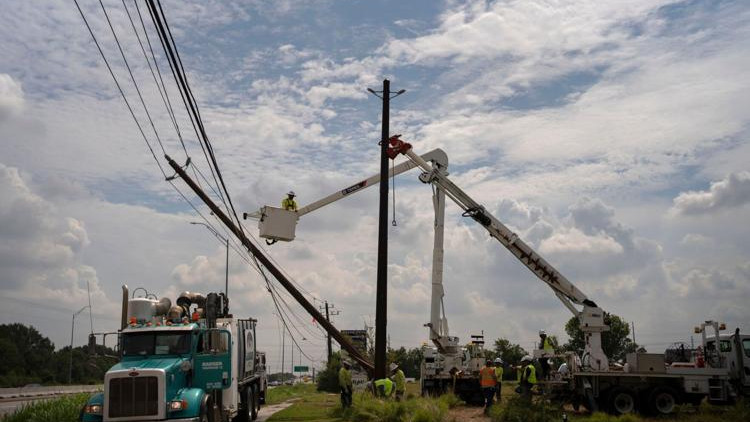
The AI and data center boom is driving massive electricity demand, forcing utilities worldwide to invest hundreds of billions in grid upgrades and new transmission infrastructure. The information technology industry is driving massive growth in global electricity demand, which is set to rise by more than 10,000 TWh over the next ten years. For this electricity to reach demand hubs, grids around the world will need urgent upgra
The problem
A Cornell University study of four U.S. regions found data center operators paid only 38% of the grid infrastructure costs tied to their facilities ($3.12 billion), while households paid $5.13 billion and wholesale electricity prices rose.
In brief
A Cornell University study published this month found that data center operators in four U.S. regions paid only 38% of the grid infrastructure costs tied to their facilities. Operators paid $3.12 billion; households paid $5.13 billion. The study also found wholesale electricity prices rose in those regions because of data center demand.
The cost split matters because grid spending is rising on several fronts. The International Energy Agency's World Energy Outlook, released this week, says surging data center demand is amplifying strains in some markets and supply chains. The EU plans €584 billion ($641 billion) in grid upgrades by 2030, and the article argues the bill will likely land on consumers.
Politics is already shifting. Community opposition to new facilities helped tip the midterms toward Democrats, according to the article, and Texas, which has about a fifth of the U.S. data center build-out, has seen calls for a moratorium. Whether data center operators can be made to cover their own grid costs remains unresolved.
Main points
- Cornell researchers found data center operators paid 38% of related grid infrastructure costs in four U.S. regions, or $3.12 billion, against $5.13 billion for households.
- The same study found wholesale electricity prices rose in those four regions because of data center demand.
- The IEA's World Energy Outlook says global electricity demand is set to rise by more than 10,000 TWh over the next ten years, driven by the IT industry.
- The Wall Street Journal, citing Cleanview data, reported about 58 GW of new data centers under construction across 577 U.S. locations.
- That 58 GW was compared to six times New York City's peak electricity demand, and a fifth of it is being built in Texas.
- The EU plans to double cross-border interconnectors at a cost of €584 billion ($641 billion) through 2030.
The full story
The Cornell study covered four U.S. regions and found that data center demand pushed up wholesale electricity prices. It also measured who paid for the grid connection and use costs: operators covered 38%, or $3.12 billion, and local communities carried the remainder, including $5.13 billion from households.
The scale of construction adds to the pressure. The Wall Street Journal, citing Cleanview, reported about 58 GW of new data centers under construction across 577 U.S. sites, which it compared to six times New York City's peak demand. About a fifth of that capacity is in Texas.
Policy responses are emerging. Texas Governor Greg Abbott banned new data center approvals earlier this year to investigate effects on energy prices, and Governor-elect Gina Hinojosa's campaign website called for an immediate moratorium until the legislature can set protections.
The IEA said keeping electricity available and affordable depends on grid expansion and operational flexibility, and that AI is expected to help with efficiency and grid optimization but for now data center demand is straining some markets. The article says making data center operators pay for their own supply and grid upgrades clashes with AI ambitions.
Sources
1 on file- OilPriceoilprice.com
Talk it over
A Cornell University study of four U.S. regions found data center operators paid 38% of related grid costs ($3.12 billion) while households paid $5.13 billion. How would you weigh that split against the demand for AI growth?
AI Boom Forces Massive Investment in Power Grids Worldwidehttps://truvace.com/item/ai-boom-forces-massive-investment-in-power-grids-worldwide
A Cornell University study of four U.S. regions found data center operators paid 38% of related grid costs ($3.12 billion) while households paid $5.13 billion. How would you weigh that split against the demand for AI growth?
Answer in the threadThe Cornell figures cover four U.S. regions, and the EU's €584 billion grid plan is a projection. Which of these numbers would you trust to describe a town you know, and why?
Answer in the threadTexas has about a fifth of the U.S. data center build-out and has seen calls for a moratorium. Who should decide how grid upgrade costs are shared: state governors, regulators, operators or voters?
Answer in the thread
If you have more time
Look up how your local electricity bill is set and who approves grid upgrade costs. How would data center demand show up there, if at all?
Answer in the threadWhat measurements over the next few years would show whether operators covering more of their own grid costs changes wholesale prices for households?
Answer in the thread
Related records
Climate
AI for renewable power grids is promising on paper, but a new review finds no measured results
International Journal of Advanced Research in Science Communication and TechnologyClimate
Data center power demand may hit up to 1,050 TWh in 2026, review of 18 sources finds
World Journal of Advanced Engineering Technology and Sciences


What readers say